Your Missions Vision Starts With One Simple Decision
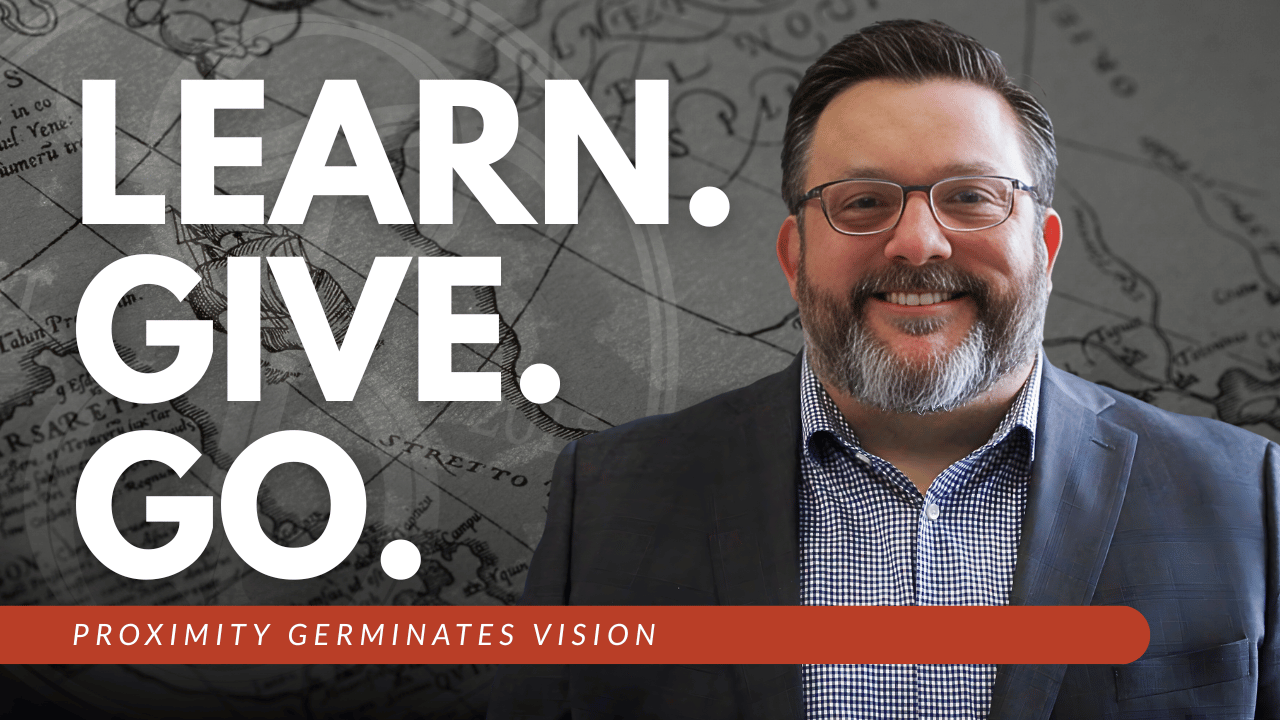
How Proximity Unlocks Your Vision for the Great Commission
Twenty years ago, Bill Tibbets had zero interest in moving to Minnesota. He and his wife were living comfortably in Indianapolis when an opportunity to interview for a professor position in Minneapolis came up. Minnesota meant negative 60-degree winters, lung damage warnings, and a life far from anything familiar. They had no vision for it, no desire for it, and certainly no plans to pursue it.
But then something shifted. The moment Bill stepped onto that campus, peace dropped into his spirit. He looked at his wife and said, “I think we’re moving here. Let’s go buy our winter coats now.” What changed? He got close enough to see what God was doing. That day, Bill learned a principle that has shaped how he approaches the Great Commission ever since: Proximity germinates vision.
If you’ve ever struggled to care about missions, felt disconnected from the Great Commission, or wondered why global evangelism doesn’t ignite your heart, this workshop framework might be the missing piece. Because the truth is, most of us don’t lack passion for missions because we’re disobedient or unspiritual. We lack passion because we lack proximity.
Why Proximity Matters More Than Passion
Proximity isn’t just about physical location, it’s about creating intentional nearness to what God is doing around the world. Bill breaks proximity into two types: proximity of heart and proximity of place.
Proximity of heart happens when you begin praying for something consistently. You’ve probably experienced this: you start praying for a friend going through a hard season, and suddenly you notice every sermon illustration, every song lyric, every conversation seems to connect back to their situation. That’s not coincidence. That’s proximity of heart creating vision. When you pray for something, you become attuned to how God is moving in that space.
Proximity of place is when you physically show up. Bill’s sister was adamant she was a city girl, she had no interest in building a home on rural property with chickens and hills. Her husband tried to convince her for over a year. Nothing worked until he finally got her to visit the property. She walked the land, saw the potential, and within hours she was planning where the chicken coop would go. Physical proximity gave her vision for what was possible.
The same principle applies to the Great Commission. It’s hard to have vision for what God is doing in Turkey, Myanmar, or Guinea when you’ve never prayed for those places or been anywhere near them. Proximity doesn’t just fuel passion, it births vision that didn’t exist before.
The Learn, Give, Go Framework
This is where The Stone Table’s Learn, Give, Go model becomes practical. It’s a simple framework designed to help marketplace believers move from indifference to engagement with global missions. Each step is accessible, each step builds proximity, and each step germinates vision.
Learn: Where Do You Know the Least?
The first question Bill asks in the workshop is disarmingly simple: look at a world map and place a sticker on the country where you know the least about what God is doing. Not where you feel most called, not where you’ve already been, but where your knowledge is thinnest. For some people, it’s a country they’ve never heard of. For others, it’s a place they couldn’t locate on a map if their life depended on it.
This isn’t a shame exercise. It’s an awareness exercise. Ignorance isn’t sin, but choosing to stay ignorant when the Great Commission is our mandate? That’s a different conversation. The Learn step is about acknowledging blind spots and deciding to do something about them. Once you’ve identified your country, commit to learning something about it today. Google it. Find out what language they speak. Research what challenges the church faces there. Visit The Stone Table’s BAM Eco Map to see how Business as Mission is advancing the gospel in that region.
Here’s your action step: pick one country you know almost nothing about. Spend 15 minutes this week learning about it. That’s proximity of heart beginning to form.
Give: Where Would You Support Financially?
The second question moves from knowledge to investment: where would you be willing to give financially to support what God is doing? Bill is quick to clarify, this isn’t about thousands of dollars. It’s about $5. Five dollars. The amount doesn’t matter. What matters is whether you’re willing to put skin in the game.
Giving creates a different kind of proximity. When you financially support work in another country, you become invested in what’s happening there. You start paying attention. You pray differently. You care more deeply because now you’re not just observing, you’re participating.
Bill strongly encourages giving through your local church first. If your church supports missions work, partner with them. If they don’t, introduce them to The Stone Table or other reputable missions organizations. But don’t let the lack of a perfect giving channel become an excuse for disengagement. Find a way to give, even if it’s small, even if it’s imperfect.
Here’s your action step: pick one country or one missions worker you’d be willing to support financially this month. It doesn’t have to be life-changing money. It just has to be intentional participation.
Go: Where Could You Actually See Yourself Going?
The final question is the most uncomfortable: where could you go, even if it feels unlikely? Go could mean a week-long missions trip. It could mean a year overseas. It could mean relocating permanently. The timeline doesn’t matter. What matters is whether you’re willing to entertain the possibility that God might want you physically present somewhere for His purposes.
In the workshop, Bill asks people to place a sticker on a country where they could see themselves going. Some people say Turkey. Others say Myanmar or Guinea or Singapore. The specifics aren’t the point. The point is creating enough proximity to imagine yourself there. Because until you can imagine yourself going, you’ll never actually go.
Physical proximity is the most powerful form of vision-building. It’s one thing to read about unreached people groups. It’s another thing entirely to sit across the table from someone who’s never heard the name of Jesus and realize you’re the only believer they might ever meet. That kind of proximity doesn’t just build vision, it transforms your entire understanding of what the Great Commission requires from you.
Here’s your action step: talk to your church about upcoming missions trips. If they’re not offering any, reach out to The Stone Table about BAM-related short-term trips. Even if you can’t go this year, begin praying about where God might want you to go in the future. Let proximity of heart prepare you for proximity of place.
Proximity Through Prayer: The Foundation for Everything
Before Bill closes the workshop, he makes one final move. He hands out prayer cards with names and faces of real people serving in hard places. He asks everyone to commit to praying for one person or one country for a full week. Not a day. Not a casual mention in a prayer list. A week of focused, intentional prayer.
Why? Because proximity starts with prayer. Vision starts with creating proximity. You can’t care deeply about something you never think about. You can’t have vision for something you never bring before the Lord. Prayer is the first step in building proximity of heart, and proximity of heart prepares you for every other step in the journey.
Take the prayer card. Put it on your dashboard. Stick it on your bathroom mirror. Set a daily reminder on your phone. For one week, pray for that person, that place, that work. Watch what happens. You’ll start noticing news articles about that country. You’ll hear someone mention that region in conversation. You’ll feel a stirring when you read Scripture about the nations. That’s not random. That’s proximity germinating vision.
What Happens When You Refuse Proximity
Here’s the uncomfortable truth Bill doesn’t say out loud but that’s woven through the entire workshop: if you’re not engaging with the Great Commission, it’s probably because you’re avoiding proximity. You’re not praying about missions. You’re not learning about unreached peoples. You’re not giving toward gospel work overseas. You’re not going anywhere. And because you’re not creating proximity, you’re not developing vision.
That’s not a condemnation, it’s a diagnosis. And the prescription is simple: choose proximity. Learn something new. Give something small. Go somewhere uncomfortable. Pray for someone specific. Do one thing this week that creates nearness to what God is doing around the world.
Because if you belong to Jesus, the Great Commission belongs to you. It’s not optional. It’s not for missionaries and pastors and super-spiritual people. It’s for marketplace believers with jobs and families and mortgages. It’s for you. And proximity is how you move from obligation to vision, from duty to desire, from indifference to engagement.
Take Your Next Step
Proximity germinates vision. That means vision doesn’t happen in a vacuum. It doesn’t happen by waiting for a burning bush or a dramatic calling. It happens when you intentionally move closer to what God is already doing. So pick a country. Learn about it. Give toward it. Pray for it. And see what God does in your heart when you create proximity.
The Great Commission isn’t waiting for you to feel ready. It’s waiting for you to get close enough to see what’s possible.
Full Transcript
Bill Tibbets: I’m Bill Tibbets. I’m glad to be here with you this morning. We’re going to do a little gear shift. We’re going to move into workshop mode and take the information, the content that we just digested, and actually digest it together. How’s that sound?
So I’m going to do a little energy shift here. This is what I would like us to do. So, Amy, you got some music ready for me? Who’s got music? Get ready with some music here. All right. This is what I want you to do. I want you to think of a place that you have traveled to, a state or a country that you really enjoyed.
Now I know we’re super spiritual here this morning, but you can pick a place that you went on a vacation. That’s all right. Or someplace that you served or someplace that your parents dragged you to as a kid, but someplace that you enjoyed. Like when you think of the state or this country that you went to, you’re like, yes, I really liked Mexico.
I really, what did the Love Boat, who, guys remember the Love Boat? Where was, where did the Love Boat, they always dropped them off in Mexico somewhere. Where was that? Puerto Vallarta. They always destined for Puerto Vallarta. We have a team member on our team who did not know what the Love Boat was. I’m like, that’s how I got trained up as a kid, was watching the Love Boat. All right, all right.
So I want you to think of your place, think of your place, think of your place, okay, turn to your table. I’m not gonna have you do any, we’re not gonna talk about this, don’t worry, but we’re gonna get the energy. So I want you to think of that place. Give me some music, DJ.
Oh, that’s gonna put me to sleep. Oh, wait a minute. I feel it. Oh no, it’s Christmasy. Okay, I got it. All right, think of your place, think of your place. I’m gonna count to three. We need a drum roll. Can I get a drum roll? I’m gonna count to three, two, one. Come on, drum roll, come on. Wait, this is, you gotta get people moving. All right? On three, two, one, you’re gonna say your place to your team. Here we go. Three, two, one, go!
Did anyone have the same one? No?
All right, John, where did you say? John said Alabama. Anyone else say Alabama? No? All right. Is this another John? John with an H. Tell me John with an H, where did you say? Where? Dominica. Like that’s pretty cool. Where did you say it was at? Awesome. That’s cool. I like it.
Let’s do back table. Someone at back table. Where did you say? Zimbabwe. As someone who’s been there for a while. Yes. That’s how you say it. Let’s do one more. Here we go. Over here. I can’t say that. I was a former professor, but there’s a reason I’m not anymore. All right, say it one more time. Tajikistan. I know the country, I just can’t say it. Tajikistan. Did I do it? Good job. I like that, good.
All right. Hey, let’s transition into workshop mode here. Almost 20 years to this month ago, my wife and I were just looking for an opportunity for me to transition into higher ed as a professor. And so we started looking for those opportunities around the country. We were living here in Indianapolis at the time. And someone shared with us about a school that was looking for a business professor in Minneapolis, Minnesota.
Now Minneapolis has been in the news a lot lately, but 20 years ago, not quite for the same things. We had no interest in moving to Minnesota. Now we knew it was the land of 10,000 lakes, but we also knew it as the land where they filmed The Empire Strikes Back, the frozen tundra. It’s very cold up there. In fact, secret, we did move there, but our first year there, that winter was negative 60 up there. That’s when you get to the point when there are things that go out on the news that say, this is how long you can be outside without causing severe damage to your lungs.
We had no interest, no interest. But I interviewed and some way, somehow they invited us to come to campus, to visit the campus and to proceed through the interview process. At that point, we were like, we have no interest in moving to Minnesota, but we’ll just follow this through and see what happens. And then we got there and we had that moment. I know you’ve had these moments when you step onto something or you go somewhere and you’re like, ah, dang it. The Lord’s leading us here.
And I think it was before that very first conversation. I remember very distinctly where I was on that campus thinking the peace just dropped in me and I looked at my wife and I said, I think we’re moving here. Let’s go buy our winter coats now, you know, kind of thing.
Something I learned that day has really impacted a big part of how I walk forward. You need to write this down because it’s not in your book, but I would encourage you to write this down. There is a relationship between proximity and vision.
There is a relationship between proximity and vision. Proximity germinates vision. I’ll say that again. We’re in Indiana, so we know the word germinate, right? Yes, germinate, farming. Proximity germinates vision, meaning it fuels it. It causes vision to grow. Proximity causes vision to grow.
When I read the Word and in my own experiences, I kind of break up proximity in two ways. When I have proximity of heart, and then when I have proximity in physical location. Have you ever been praying for something? You just started praying for something and then it becomes the thing that you only think about because you’re praying about it. Or the only thing that you look at, you see because you’re thinking about it. We’re committing it to prayer.
There’s the, have you heard of the red car exercise? So I’m about to see a couple of head shakes, right? Go, I want you all day today, just go look for red cars. Anytime you’re out, just look for a red car and you’ll be shocked at how many red cars you see. It’s because you’re looking for them, right? When I’m praying for something, it’s shocking how I see the Lord moving in that space because I’m praying for it. Okay.
The other thing in proximity I see is physical location. When I physically get somewhere, now I can see the potential. I remember when my brother-in-law, I was trying to convince my sister to build a home on this property in the hills and all this stuff. She’s like, oh no, I’m a city girl. I don’t want to do this. And it was several, several months, if not over a year for him to try to convince her. And then he finally is like, well, let me take you to the property I’m thinking about that I think we should consider. And they go to the property and all of a sudden she’s like, I’m a country girl now. You know, and she laughs every time she’s like, I’ve got 12 chickens, Bill. You know, what do I do with all these eggs? I’m like, you throw them at people. I don’t know.
Proximity germinates vision.
Sometimes I don’t think we have vision for the Great Commission or global missions because we’re not praying about it and we haven’t been doing it. That makes sense. And what Erik was sharing was this model called Learn, Give, Go. So that’s what we’re going to be doing today. A Learn, Give, Go exercise.
So let’s, let’s jump into it. So on your table, we have these awesome little maps. Let’s praise God for Amazon that can ship within two days despite the weather. We have these little maps and I want to do a little bit of exercise and Erik’s going to play some music for us while we do these exercises.
But on this first exercise, and I don’t want you to be like, I have to wait for a burning bush moment right now for the Lord. Oh, no, this is your, I’m a talking donkey. The Lord’s using me to talk to you. Remember how the donkey was used? I’m your donkey right now. Okay. So I’m asking you to think about taking one of those stickers that’s on your table, pick a color and that becomes your color this morning. And I want you to place a sticker where you know the least, the least about what God is doing.
Now this obviously is not a shaming thing. This is just an exercise for your table and for yourself. Okay. Let’s get some music going and then I’ll walk you through the rest of what we’re going to do. Take a second. Look at that map. Where do you know the least? All right. Put your stickers down on there.
And in this process, I’m going to give you a couple of minutes. Jump into your workbook now and I want you to write down where you keep the music going. I want you to write down where did you place your sticker? What drew you to that place? Maybe it’s like I just saw a word on the map I’ve never seen before and that’s what I picked. And I’m like, amen. The Lord can use that, I’m good.
Look at those questions in that book and just take literally three minutes. And I only do three minutes because I want your initial thoughts. I don’t want a paper. I don’t even want a paragraph. I just want your initial thoughts. Answer those questions in your workbook real quick. Under Learn.
Go ahead and start. I want you guys to share with one another. Now, just take a few minutes. Try really hard to allow everyone around your table to share. There’s not huge tables here. So let’s keep the music going. And let’s talk. Share about your answers. And why did you pick that country? Where are you getting your information from when it comes to knowing what God’s doing around the world? Go for it. Share with your team.
So when it comes to that Learn section, one thing is I wanna encourage you is to take that country that you just picked and go learn something about them today. Go Google it and figure out what’s going on. And if you want, you can go to the Stone Table page and click Learn. And if you go in that Learn section, there’s something called a BAM Eco Map. And you can go to this map and it will show you BAMs around the world that our friend and peer John has been working on with some others, and it can show you what’s going on, at least in the BAM context.
So take this moment of ignition and go learn about this country. Okay. So let’s give, go to the Give section. So place a sticker. Now it could be the same country, but place a sticker on the map where you would be interested in helping support financially. Now, let me say this again, we’re not taking an offering. And two, giving can also be more than just finances. But if it is financial, $5, we’re not talking thousands, $5. Where is some place that you feel like I would feel good or I feel the Lord’s prompting me to participate financially in what he is doing in this country? Okay, go for it.
Hey, when it comes to Give, one of the things we are always pushing is we want you to give through your local church. Give through your church, give through your church, give through your church. If you though are in a position where maybe your church isn’t giving to missions or whatever, please introduce them to us. We’d love to connect with them. But two, you can go to the Give page on The Stone Table and there’s opportunities to give into BAM. This feels like a pitch for The Stone Table. I promise you it’s not. It’s just randomly turning into that.
All right, let’s move on to the last one. Go! Uh-oh. Someone says, the Lord’s tapping on someone’s heart this morning. Here we go, here we go. I want you to place a sticker on the map where you could go, even if it feels unlikely. Now, go could be short term. Go could be long term. Go could be something in the middle. Who knows? I don’t know. But I’m asking that you will take a step of faith and say, there’s a little thing inside me that says, I think I actually could maybe possibly see this happening. All right, go for it.
Hey, just real quick, I’m curious. What are some, what’s a country, someone over here, let’s go here. Guys, all we’re back here. What’s a country that someone’s willing saying, I’m open. Let’s see if the Lord moved my heart, I’d be open. Ask God, Big Beard, my friend, what are you thinking?
Oh, let’s go Turkey or Singapore. Did anyone else say Turkey or Singapore? Just curious. Interesting. You should talk to John. He knows a lot about Turkey. So that’s really cool. Let’s go, let’s go. Who else? You guys. Did you guys pick a country? Myanmar. Myanmar is pretty awesome. Where’s Myanmar at? Northwest of Thailand, that’s awesome. Let’s do back table. Guinea. I love that. That’s awesome. Very, very cool.
Hey, if your church is offering missions trips, I’d encourage you to look at them and see, Lord, what’s the possibilities? I’m interested in Turkey, but my trip, my church is going to Uganda. Maybe I should do Uganda this first time. If your church is not doing a trip, I’d encourage you to chat with Ryan here because he’s building some short term trips for next year still, and they’re all BAM related. So you can go overseas, see and serve in a BAM context. And he has places all over and he’d be willing to talk to your church as well.
Okay, lastly, before I hand it off, you see these little cards here on the table with these people? First off, let me just give a quick shout out to my daughter. My daughter, who’s a marketing major, she crafted these, all these little images by hand. She painted all of those. Incredible little nugget, right? We just got to monetize that gift somehow, right?
Hey, Learn, Give, Go. Proximity starts with prayer. Vision starts with creating proximity. Proximity, let’s create proximity through prayer. I want you to take at least one card from your table or another table and say, I know nothing about these people or this country, but I’m going to pray for them for one week. Is that fair? Would you guys be willing to make that commitment, all of you? Yes? Yes? Yes, thank you.
Sorry, my professor kicks in every once in a while. You’re not 21 year olds, you’re adults. Okay, yes, yes, yes, right? Yes, yes, yes. We’re gonna take one card, and I encourage, I like to put my, like, I like to put it in my vehicle and put it right there by the radio, and I’m like, I’m not gonna listen to your radio, I’m gonna pray right now. I did have a wreck three months ago, so I shouldn’t probably do that anymore. But nonetheless, I was praying.
All right, hey, we love you guys. We’re gonna close this out. Give us three more minutes. John’s gonna share something with you real quick.

The Stone Table
The Stone Table is a global missions organization rooted in the marketplace. We leverage the profits from our marketplace businesses to fund strategic global missions projects around the world. We also equip and encourage marketplace Christians to make Jesus known at work and around the world.