
Unreached People Groups: Why This Matters More Than You Think

A Baptism That Changed Everything
Picture this: a single man standing in a small inlet of the Indian Ocean, about to be baptized. It sounds like a simple moment, maybe even ordinary. But this baptism was anything but ordinary. This young man was the first known believer in a completely unreached people group. No one from his tribe, no one from his specific ethnic culture had ever become a follower of Jesus before him.
Years later, his story continues to unfold. Through his faithful witness, a small church has begun to blossom in what was once a completely unreached part of the world. The costs have been real, but so has the fruit. This baptism represents something millions of people around the world still wait for: their first opportunity to hear about Jesus.
The question is, what role will marketplace believers play in making sure everyone gets that opportunity? This post will unpack what unreached people groups actually are, why the term matters, and how your business skills might be the very bridge that brings gospel access to places where traditional missions can’t go.
What Unreached Really Means
Here’s where confusion often creeps in. Many Christians use the word “unreached” to describe anyone who hasn’t personally heard about Jesus. But in missiological terms, that’s not what unreached means. The term was specifically cultivated to describe cultures and regions where there is little to no meaningful access to the gospel.
According to the Joshua Project, an unreached people group is an identifiable ethno-linguistic group, a people with their own shared history, identity, and way of life who lack a sufficient indigenous community of Christians to sustain and evangelize the rest of their people without outside help. In practical terms, this means fewer than 2% evangelical believers and fewer than 5% professing Christians.
Why does 2% matter so much? Sociologists tell us that 2% functions as a tipping point. Below that threshold, no movement, spiritual or otherwise, can sustainably reproduce itself. In a village of 5,000 people, 2% means just 100 believers. If those 100 people don’t have a Bible in their language, if they don’t have a church they can walk to, if they don’t have leaders to disciple the next generation, then the light will flicker out. That’s why 2% isn’t just a statistic. It’s a survival line.
The word unreached is not primarily about belief. It is about access.
Why Guarding the Term Matters
Let me give you a simple example of why we have to guard the meaning of the term unreached. In Indianapolis, there are more than 1,000 evangelical churches. Are there people in Indianapolis who haven’t heard the good news of Jesus? Absolutely. Are there unreached people there? No, not by missiological definitions. Indianapolis doesn’t just have access, it has overwhelming access.
That distinction matters because the distribution of global resources doesn’t match the distribution of the need. Even though 42% of the world’s population lives in unreached people groups, research shows that less than 3% of all foreign missionaries are working among them. When you look at the finances, it’s even more lopsided. Less than 1% of all Christian giving is directed towards the unreached.
This isn’t about diminishing the importance of work being done in reached areas or in our own neighborhoods. It’s about recognizing that billions of people still have almost no access to the gospel at all. That’s an injustice we rarely talk about.
The Biblical Foundation: Ethne Not Nations
When Jesus gave the Great Commission, He said, “Go make disciples of all nations.” The word He used for nations was the Greek word ethne. Ethne doesn’t mean modern nation states. He wasn’t talking about political borders. When he said ethne, he was talking about people groups.
In other words, when Jesus sent his followers out, making disciples of all people groups was what he had in mind. An unreached people group is a people who share a common culture and language but who lack sufficient Christian witness to reach the rest of their people. This isn’t a generic label for anywhere people need Jesus. Rather, it refers to places where if someone doesn’t go cross-culturally to engage them, the people there have little or no opportunity to ever hear the good news about him at all.
Where the Unreached Are
More than 40% of the world still lacks meaningful access to the gospel. Those people are largely concentrated in a region often called the 10/40 window, stretching from North Africa across the Middle East and into South and East Asia. We’re talking about Muslim, Hindu, Buddhist, and secular communities who have never had the chance to hear the name of Jesus explained clearly.
There’s also an important conversation to be had about unreached diaspora communities. Many people from truly unreached parts of the world have moved to the West as students, employees, refugees, or immigrants. This reality expands the church’s opportunity for faithful witness to the unreached right in our own backyards. In many cases, the unreached have come to us. But that does not mean we don’t need to go to them. And it does not erase the access injustice that originally gave rise to the term unreached in the first place.
Where the Marketplace Becomes Critical
Here’s where your business skills become missionally essential. In many of the nations where unreached people groups live, a missionary visa is an impossibility. But an entrepreneur, an engineer, a tech consultant? They’re often welcome.
The marketplace isn’t just a way to fund missions in many places, it’s the only way to engage in missions. Business becomes the bridge for gospel access. The global church must continue to send cross-cultural workers to unreached places, and many of them will go as business leaders, professionals, and entrepreneurs.
That baptism in the Indian Ocean wasn’t just a beautiful moment. It was a first. And it happened because some missionary entrepreneurs crossed a cultural boundary. Somebody went. Somebody believed that access matters.
Three Ways to Engage
1. Learn. Deepen your heart for global missions and understand how the marketplace is helping bring gospel access around the world. The more you understand about unreached people groups, the more strategic you can be with your business skills and resources.
2. Give. Direct your financial resources so that the gospel can go where it has not yet arrived. Remember, less than 1% of all Christian giving goes to the unreached. You can change that ratio with intentional giving.
3. Go. Whether across the street or across cultures, we are sent to make Jesus known. Your marketplace skills, your business connections, your professional credibility, these aren’t secondary to the mission. In many cases, they are the mission strategy.
The Access Injustice We Must Address
Unreached people groups aren’t places where Jesus is unwanted. They’re places where he is yet unknown. And until access exists, the work of the Great Commission isn’t finished.
The term unreached matters because it reminds us that geography still matters in God’s mission. Yes, there are lost people everywhere. But there are specific people groups who have almost zero chance of hearing about Jesus unless someone goes cross-culturally to engage them. That’s not just a missions need, it’s a justice issue.
Your business might be the very tool God wants to use to bring gospel access to people who have been waiting for centuries to hear about Jesus for the first time.
Final Thoughts
From a Great Commission perspective, we have to guard this word. Unreached refers to specific people groups around the world who still have little to no gospel access. These are the places where marketplace believers have an unprecedented opportunity to make an eternal impact.
If you want to explore how your business can become a bridge for gospel access, The Stone Table has created extensive resources to help you take your next step. Learn more at thestonetable.org, because access matters.
Full Transcript
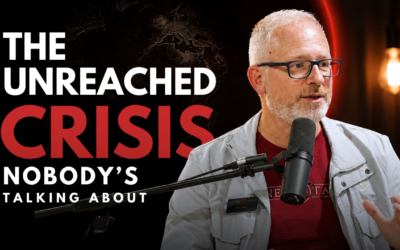
Erik: A number of years ago, I had the opportunity to attend a baptismal service unlike anything I had ever experienced before. It was just one guy. He was being baptized in a small inlet of the Indian Ocean. At that moment, it changed me forever. Why? Well, because this young man, he was the first known believer in a completely unreached people group. Up to that point, no one from his tribe, no one from his specific ethnic culture had ever become a follower of Jesus.
Years later, the impact of that moment and his story is still unfolding in that part of the world and in me. See, it hasn’t been easy. There have been real costs and yet through this man’s faithful witness, a small church has begun to blossom in what was a once completely unreached part of the world. See, that baptism is a moment I never want to forget.
And we have friends all over the world today who are engaging in places just like that, places where there is currently little to no access to the good news of Jesus. We call these unreached people groups, or UPGs for short. And I want to unpack that phrase for you today because it matters deeply in a global missions context.
According to the Joshua Project, an unreached people group is an identifiable ethno-linguistic group. So think of it like a distinct brand of culture and language, a people with their own shared history, identity, and way of life. And those specifics matter. See, when Jesus gave the Great Commission, He said, go make disciples of all nations. And the word He used for nations here was the Greek word ethne.
So ethne doesn’t mean modern nation states. He wasn’t talking about political borders. When he said ethne, he was talking about people groups. In other words, when Jesus sent his followers out, making disciples of all people groups was what he had in mind.
An unreached people group then is a people who share a common culture and language, but who lack a sufficient indigenous community of Christians to sustain and evangelize the rest of their people without outside help. So in practical terms, this is often defined as fewer than 2% evangelical believers and fewer than 5% professing Christians.
And here’s why that matters. See, sociologists tell us that 2% functions as a tipping point. Below that threshold, no movement, spiritual or otherwise, can sustainably reproduce itself. So let me put that into perspective. In a village of 5,000 people, 2% means just 100 believers. See, if those 100 people don’t have a Bible in their language, if they don’t have a church they can walk to, if they don’t have leaders to disciple the next generation, then the light will flicker out. That’s why 2% isn’t just a statistic. It’s a survival line.
So now here’s the key issue, and this is where confusion often creeps in. The word unreached is not primarily about belief. It is about access. See, people often want to flatten the term unreached to mean anyone who hasn’t personally heard about Jesus. But in missiological terms, that’s not what unreached means. See, this term was specifically cultivated to describe cultures and regions where there is little to no meaningful access to the gospel.
See, this isn’t a generic label for anywhere people need Jesus because that’s everywhere. Rather, it refers to places where if someone doesn’t go cross-culturally to engage them, the people there have little or no opportunity to ever hear the good news about him at all.
So let me give you a simple example of why we have to guard the meaning of the term unreached. See, in my home city of Indianapolis right here, there are more than 1,000 evangelical churches. 1,000. Are there people here all around me that haven’t heard the good news of Jesus? Absolutely. Are there unreached people here? No, not by missiological definitions. See, my community doesn’t just have access. It has overwhelming access and that distinction matters.
See, the reality is that the distribution of global resources, it doesn’t match the distribution of the need. See, even though 42% of the world’s population lives in unreached people groups, research shows that less than 3% of all foreign missionaries are working among them. And when you look at the finances, it’s even more lopsided. Less than 1% of all Christian giving is directed towards the unreached.
This isn’t about the importance of work being done in other parts of the world or right here in our own neighborhoods and communities. It’s about the fact that billions of people still have almost no access to the gospel at all. And that’s an injustice we rarely talk about today.
Now, there’s an important conversation to be had about unreached diaspora communities among us. See, there are many people from truly unreached parts of the world that have moved to the West as students, as employees, as refugees, or as immigrants. This reality expands the church’s opportunity for faithful witness to the unreached right in our own backyards. And in many cases, the unreached, they’ve come to us. But that does not mean we don’t need to go to them. And it does not erase the access injustice that originally gave rise to the term unreached in the first place.
From a Great Commission perspective, we have to guard this word. Unreached refers to specific people groups around the world who still have little to no gospel access. And when we talk about where those people groups typically are, the geography is surprisingly focused. More than 40% of the world still lacks meaningful access to the gospel. And those people are largely concentrated in a region often called the 10/40 window stretching from North Africa across the Middle East and into South and East Asia. We have Muslim, Hindu, Buddhist, and secular communities who have never had the chance to hear the name of Jesus explained clearly.
See, here’s where the marketplace becomes critical. See, in many of these nations, a missionary visa is an impossibility. But an entrepreneur, an engineer, a tech consultant, they’re often welcome. You see, the marketplace isn’t just a way to fund missions in many places, it’s the only way to engage in missions. Business becomes the bridge for gospel access, which means this. You see, the global church must continue to send cross-cultural workers to unreached places, and many of them will go as business leaders, professionals, and entrepreneurs.
That baptism in the Indian Ocean wasn’t just a beautiful moment. It was a first. And it happened because some missionary entrepreneurs, they crossed a cultural boundary. Somebody went. Somebody believed that access matters. And that’s what we mean when we talk about unreached people groups. These aren’t places where Jesus is unwanted. They’re places where he is yet unknown. And until access exists, the work of the Great Commission, it isn’t finished.
So here’s our invitation at The Stone Table. Learn, so you deepen your heart for global missions and understand how the marketplace is helping bring gospel access around the world. Give, so that the gospel can go where it has not yet arrived. And go, go, whether across the street or across cultures, we are sent to make Jesus known to ensure everyone has access, every people group, every ethne.
So if you want to explore this more, we’ve created tons of resources to help you do just that. You can learn more and take your next step at thestonetable.org because access matters.

The Stone Table
The Stone Table is a global missions organization rooted in the marketplace. We leverage the profits from our marketplace businesses to fund strategic global missions projects around the world. We also equip and encourage marketplace Christians to make Jesus known at work and around the world.