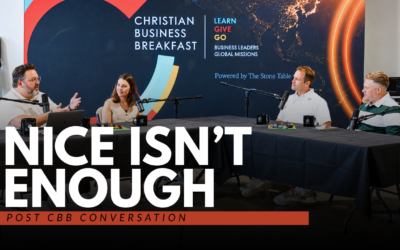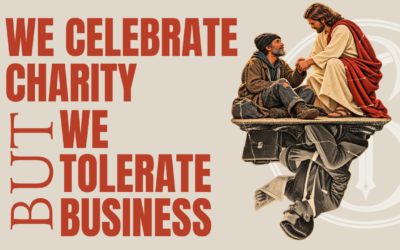

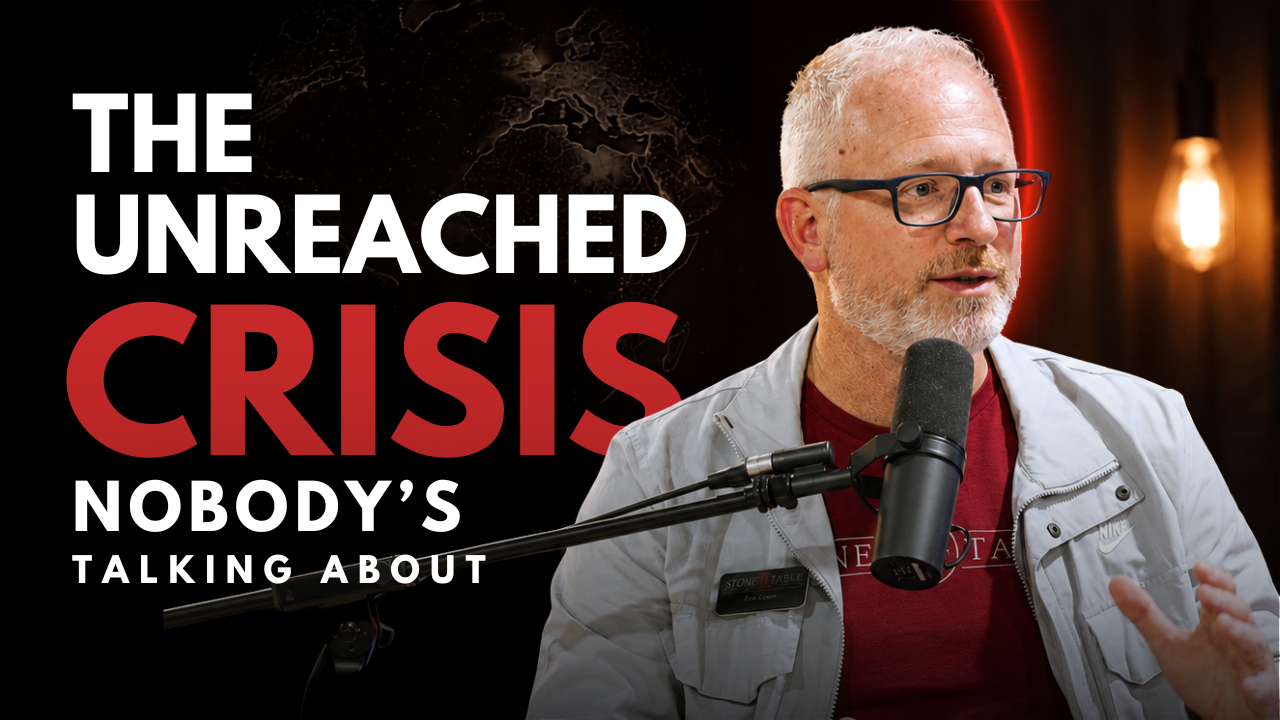
The Unreached Crisis Nobody’s Talking About (Christian Business Breakfast Conversation)
The Mission Field You Walk Into Every Monday
Most of us think of missions as something that happens over there. Far away. Across an ocean, behind a visa wall, in a language we don’t speak. It belongs to the professionals, the people who went to Bible college and raised support and shipped their lives overseas.
But what if the most strategic mission field in the world is the one you badge into every morning?
At a recent Christian Business Breakfast, two global workers sat down to challenge a room full of marketplace leaders. One leads a movement planting churches among the world’s least-reached peoples. The other has spent two decades running a coffee shop in Vietnam. Their message was simple and uncomfortable: the Great Commission was never meant to be outsourced.
Equally Lost, Unequal Access
Here’s the tension every honest believer feels. Why care about people on the other side of the planet when there are lost people on my own street?
The answer reframes the whole question. The issue is not who is more lost. The issue is access.
As Dick Brogden, global leader of the Live Dead movement, put it: “Equally lost, unequal access.” The person in your office and the person in a closed country are equally in need of Jesus. But one of them drove past a dozen churches on the way to work this morning, and the other could be born, live, and die without ever meeting a single Christian.
Today, roughly 42 percent of the global population is considered unreached. That is about 3.8 billion people. And less than 1 percent of all Christian resources are aimed at them. This is not an either-or between home and the nations. It is a both-and. You are God’s answer in the place He has put you, and you are part of His answer for the places where there is no one.
Why Business Opens Doors Ministry Cannot
In many of the hardest places on earth, there is no missionary visa. There is no front door. So the church has to get creative.
That is where the marketplace becomes a master key. A legitimate business creates what one global worker called credible presence. You are genuinely serving people, adding value, employing locals, and meeting real needs. And in the process, you gain access that a pastor with a Bible school degree could never get.
Consider the coffee shop in Southeast Asia. The team does not teach English. They host conversation rooms where locals come to practice. The average customer stays for three hours. Over twenty years, they have shared the gospel for the very first time with more than 40,000 people, discipled over 250, and sent 14 into full-time ministry.
Brogden adds a second advantage: renewable clientele. Share Jesus with ten friends and watch them all say no, and you run out of people. But a business brings a steady flow of new faces every single week. More conversations means more fruit.
Marketplace Skills Are Missionary Skills
This is where many believers disqualify themselves. I’m not a preacher. I’m an accountant. I’m an engineer. As if that were a liability.
It is the opposite. Most business-as-mission practitioners come out of ministry and desperately need the skills you already have. Your expertise is not a detour from the mission. It is a runway.
And your most important contribution may be the one you least expect: discipleship. You see your people five days a week. You watch them handle conflict, deadlines, integrity, and pressure. The marketplace, Brogden argued, can actually make better disciples than the attractional church, because real character is forged in real work. Disciple someone well where you are, and you are quietly preparing the next generation of global workers.
Three Habits You Can Start Tomorrow
So how do you do this without becoming the office weirdo? Brogden teaches missionaries to walk in three daily encounters, and they translate cleanly into any workplace.
Love. Serve one person today. Cover a shift, bring the coffee, help with the flat tire. One concrete act of service.
Power. Pray for one person today. Someone is sick, stressed, or facing a hard decision. Ask if you can pray for them. Watch what God does.
Truth. Be known as a Jesus person. Not preachy, not pushy, but natural. The way you would talk about a team you love or a restaurant you swear by. Passion is not weirdness. “Whatever we naturally like, we don’t have trouble talking about.”
The entry point changes day to day. Sometimes it is love, sometimes prayer. But the goal is always the same: to get, eventually, to what God has done in Christ. That is the one thing no other worldview can claim.
Who Is Your One?
The reason most believers do nothing is that the task feels impossibly large, so they hand it to the professionals and move on.
Don’t. Pick one person. One coworker, one neighbor, one regular. Invest in them for the next five years. Then imagine that multiplied across every believer in your city.
You do not need a different calling. You need a different posture toward the one you already have. “What’s most important to Jesus, He gave to you.” You walk into the mission field every Monday. The only question is whether you will see it.
Ready to make Jesus known at work and around the world? Start here: thestonetable.org/start
Full Transcript
00:04
So first, before we get into, and I’m gonna introduce the conversation we’re gonna have here this morning. We’ve got some special guests in the room today. We have a handful of our board members because as soon as this is over today, we have our annual board meeting. If you’re on the CRF Stone Table Board, can you raise your hand or stand up or one of those things? Yeah, so raise your hand. Yep, got a handful of them in the back. They’re shy, yeah.
00:30
We got quite a few in from out of town here for our meeting today. And so we’re glad to have them. Um, but today really, I want to talk to these two guys. Um, and so we are going to do a bit of a, a lot. guys may notice if you’ve come to these before, uh, we’ve kind of upped the background today. And, uh, part of that reason is we’re doing, uh, kind of a live podcast recording here. So you guys are part of.
00:57
a live conversation we’re gonna have with two very, very special friends. And so I wanna introduce first uh Dick Brogdon. ah Dick is uh the global leader of Live Dead, which is a multinational, multi-agency missions movement aimed at reaching the hard places, the unreached places around the globe with the gospel of Jesus Christ. Dick is also a dear friend.
01:24
He has taken me to some very uncomfortable places around the world and, um, and really is, uh, is one of the foremost missy ologist that has probably impacted my heart and what we do here at the stone table. And so it’s an honor for me to have Dick here this morning. And then we have Grant here as well. And Grant, um, I’m not going to use your last name because you’re with the CIA, right? Yeah, no, no. Grant is not with the CIA. Grant runs an incredible, uh,
01:51
Business as Mission Project in Southeast Asia. And I’m to let him tell you a little bit about that. But that that business has been going for a couple of decades now. Yeah. And it’s really an amazing story of how God can use the marketplace to reach people for Jesus. And so ah so today that’s what we’re going to start with. All right. So when we talk about the Great Commission, one of the things we always want to remind people of here is
02:22
Jesus said, His last words before He ascended to heaven, Matthew 28-19, was go and make disciples of all the nations, of all ethnos, of all people groups. And yet today, yet today, 42 % of the global population is still unreached with the gospel, could be born, live, and die without ever as much as meeting a Christian, let alone hearing the life-giving.
02:52
news of Jesus. So that’s about 3.5, 3.8 billion people across the globe. And yet today as well, less than 1 % or so of all Christian resources go to these unreached areas. So we believe here if you belong to Jesus, the Great Commission belongs to you. Okay?
03:19
So we don’t get to outsource our responsibility to the Great Commission, to the professionals, because we’re just marketplace or business people here in the States. We believe that the business world, that the marketplace is actually part of God’s plan to reach the nations. We love to say around here, marketplace skills are missionary skills. So today, what we’re gonna do is we’re gonna do just a little live Q &A with
03:48
these two guys and we want to give you really a heart for the globe. There’s some things that will probably be shared today that may challenge you, that may give you a new perspective. I hope they do. And then we’re going to do a little workshop on the back end with Bill Tibbitts where we’re going to kind of reverse engineer a little bit of this and we’re going to ask our missionary friends how we can learn from them to make Jesus known in our own contexts here, our own work contexts.
04:18
as well. All right, so can I pray and then we’re just going to jump into this dialogue and see where the Lord takes us. Okay, Lord, I thank you for the beauty of this morning. I thank you for the people in this room and God, we just invite you here. Lord, Holy Spirit, would you come? Would you open our hearts? Would you um just make us open to being challenged? Lord, to thinking maybe about things that we don’t normally think about and Lord, would you just open our hearts to
04:48
the people around the world, God who don’t yet have opportunity or access to the great news of Jesus Christ. And so Lord, we just ask today that you would be here, you’d be in this dialogue, that you’d move in our hearts and that you would be glorified in all things in Jesus’ name, amen, amen. All right, let’s just start with just some general introductions. So Dick, can you tell us a little bit about Live Dead and what…
05:17
lived that is all about and really, I guess, unreached people groups and why this is so near and dear to your heart. So man was not built for glory. God did not design man contrary to secular humanism to bear the weight of glory. That’s only for him. And so many of the problems we see in the world, in the church, in business,
05:47
are this glory ravenous entity that we have become. But he’s the only one worthy of glory. And I think all of us share the same calling. We are all called to Jesus and his glory amongst all peoples. And this is the meta-narrative of Scripture. And so…
06:12
This is what we were designed for, is to see Jesus glorified by every tribe, tongue, people, and nation. And that is the collective call of the whole body of Christ. So, Live Dead is just a piece of that, and glad to do that in partnership with men and women like yourselves. And the concept is simply this, that the furthest places are the most difficult to reach. And so, most of our attention
06:42
and our finances and our personnel go to those that are near. And the challenge with that, because we often will quote Jerusalem, Judea, Samaria, and the outermost part of the earth, but the exegetical flaw in that ointment is that none of the disciples were from Jerusalem. They were all from Galilee. So even in that initial commission, we’re seeing global scope for global glory. And so what Live Dead is trying to bring attention to is,
07:11
We’re grateful for all the work that is done in all the world. But what about the regions beyond? What about where Christ has not been named? What about where Jesus has not been glorified? So coming together now, we have more than 50 different agencies that are committed to this. And it has three non-negotiables. We want to plant churches amongst unreached people groups. And we want to do that in multinational, multi-agency teams. And the heart of
07:39
everything that lived dead does. actually has 12, we have 12 values, but nobody can remember 12 values, including me who wrote them. And so we condense them down into three core values. And they are this abide in Jesus. So it’s just all based on intimacy with Jesus. And you know, there’s so many methodologies and you know, if you’ve been in missions for a while, maybe business is the same every three to four years, there’s a new book and a new seminar and do these things and da da da. And after a while you get methodological fatigue.
08:08
And you just want to go back to basic simple things. so John 15 is an anchor for us where Jesus said, abide in me and I in you and you’ll bear fruit. So that’s the heart of it, intimacy with Jesus. then we want to, so abide is the one and then we say apostle, not in a weird sense of send us $10 and we’ll send you a hanky and then you’ll get healed. I’m not saying that, but in that kind of that thrust for the regions beyond the other sheep.
08:34
So always saying, where’s the next place that doesn’t have access to Jesus? And then the third big value is abandon. And we’re just saying, yeah, we need to a crucified life. And in order to do this, we’re gonna have to say no to self and no to comfort if the gospel really is gonna go where it hasn’t gone. And Dick, before we dive in further, can you give us, when we talk about unreached people groups, can you give us some context for what we mean when we’re saying that? Because that’s probably a term that’s gonna come up.
09:03
in the next few Yeah, so there’s a qualitative and a quantitative definition for the unreached. The qualitative one is that this people group, first of all, the Bible is focused on the ethnic. If you look at the blessing to Abraham um in Genesis 12, if you look at Psalms, give me the nations. If you look at the Great Commission, make disciples of all the ethnic. It’s talking of not geopolitics. It’s not talking about Pakistan as a nation. It’s talking about the 780 plus.
09:30
ethnic realities of Pakistan that have their own language, their own culture, their own religion, and their own proximate space. So when we’re looking at the peoples of the world, that first definition is they are so few, so marginalized, so afraid, or so persecuted that they cannot reach their own without external catalytic help. In other words, they still need missionaries. So that’s the qualitative. If a people group still needs help to reach their own, we would say they’re unreached. And if you want to put a quantitative,
10:00
nominal number on that we’d say less than 2 % evangelical. So if it’s 2 % or less evangelical, if within there isn’t the capacity to reach their own, we call that an unreached people group. Yeah, no, that’s good. That’s really good. So Grant, let’s move. uh Let’s move. Let’s talk a little bit about Business as Mission. Can you tell us a little bit about your your BAM in uh Southeast Asia? Yeah, so we’ve actually will be celebrating 20 years.
10:28
on the 4th of July. So as you’re celebrating 250, we’ll be celebrating 20. So our business as missions has been uh open 20 years running, operating in a uh very sensitive country. It’s Vietnam. So some of you guys might have some experience have been there before. And the doors though, have been wide open in this area.
10:54
for the gospel and for us to operate there. We’re not allowed to be there as global workers to go in that way. So that’s why we came up with the way to get in and to be able to operate there, to be creative. I think to be able to take the gospel to these unreached areas, the church is gonna have to be more creative. You know what I mean? To be able to gain access. ah And that’s what we’ve done is we’ve just gained access and we just looked at what was going on there and we leveraged the desires of the people. And at that time,
11:23
So we opened up a coffee shop and we have what we call English clubs, English speaking room where the Vietnamese will come in to practice their English. We don’t teach English. So I say we got the best job in the world. I get to hang out, drink coffee and talk with people. You know what I mean? And they pay us to hang out with them. You know what I mean? we hang out, they come in and we have conversations. Our average customer’s in there about three hours. So it’s not like an American coffee shop where everything’s through a window.
11:53
You know what mean? We’re really getting to know the people and being in relationship. like our core values are we believe that every Christian should be in a significant relationship with a lost person. I mean, that’s that’s who we are. That’s our our ministry is all about being in relationship with lost people. I grew up in the American church and when I was growing up, maybe some of you guys heard this. We were told to separate ourselves from the world. Separate yourself.
12:21
I think the church has done such a great job that we’re not impacting the world. And so uh I think we’re supposed to be in this world, but not of this world. You know what I mean? So being in relationship with those, with those lost people, but it’s not enough just to be in the relationship. It’s we have to tear, share the truth. You know, we have to have those conversations and share the truth of Jesus Christ, but we need to be led by the Holy Spirit as we’re, as we’re sharing those truths. You know, there’s times where the Holy Spirit say,
12:51
hold on, because he knows the condition of their heart. The heart’s not ready. then there’s other times where we’re like, I don’t want to share. And he’s like, no, no, now is the time. Now is the time to share it because he knows the Holy Spirit knows the condition of their heart and whether they’re ready to receive that at that time. And over the last 20 years, we’ve been able to share in our conversation rooms the gospel of Jesus Christ with Vietnamese for the very first time.
13:19
that did not know who Jesus was or anything about him, a Bible, anything with over 40,000 Vietnamese. And it’s just that consistency being there. Over 250 have been discipled and 14 are in full-time ministry today. And one of them was with Dick for a couple of years and now leading a team in one of those unreached areas. so it’s just amazing to see how someone’s coming in to…
13:46
in our context, they’re coming in to learn English or improve their English so they can earn more money, work for an international company. So we’ve leveraged that desire and they found Jesus and 14 of them are now God’s worked in their heart in such a miraculous way. They said, you know what, I’m going to give up what my desires were and go after his desires. So that’s kind of just what we do. Yeah, it’s beautiful. And so the business actually gives you credible presence because you.
14:14
running a legitimate business that’s adding value and bringing service and employing people and yet at the same time is giving you access to people who need to hear about Jesus. Yes, it’s beautiful. So I think one of the things we hear a lot um is why should I focus on people around the world when there are lost people right here in our own communities?
14:43
How do you answer that tension? um Why am I responsible for people on the Arab Peninsula or in Southeast Asia or in China when there are lost people around me right here? Yeah, I think the critical answer to that question has to revolve around the discrepancy between lostness and access. The very fact that there’s so many of you in this room is indicative that those that are lost here
15:13
have opportunity to hear about Jesus. And that there are those who do not have opportunity. So it’s not an either or, it’s a both and. But we’re so, so grateful that there, you you guys driving here drove by how many churches and how many Christian ministries, and that’s not bad. That’s a great thing. So it doesn’t, what we are not saying, let me be really clear, that the person in Mecca is more important to Jesus than the person in Indianapolis. Equally lost, unequal access.
15:43
So what we have to wrestle with as a Christian community is that inequity of access. So let’s continue to provide access locally, fantastic, on our universities, in our cities, with all the challenges that we have, without saying that has to mitigate attention on those who don’t have access. So I would just say, good job. You are the Lord’s answer in the place that he has you, but you’re also part of his answer for where there’s nobody.
16:13
And how does that affect our prayers, our mobilization, our giving, our discipleship, which we’ll come to in a moment. So I would just say let’s go for the both end, not get into an either or. Yeah, you know, it’s interesting. The first time I ever met someone who literally had never heard the name of Jesus, it’s actually kind of a humorous story. It makes people laugh because we were with a uh gentleman, a pastor missionary in the area.
16:41
And he says to this woman through a translator, we would like to introduce you to Jesus. And her eyes light up and she says, I would love to meet him. I will be back at my house later. Bring him by. I’ll make some tea. Right. And in that moment, we realized, we chuckled, but then we realized this woman has no context for the truth and the beauty of Christ who has transformed and changed our lives. She’s had no access. No one has ever told her before.
17:11
And that is a moving moment when you meet someone who’s had no access. So we were with a friend and he was just, we were with the Bedouin tribe and he was trying to be nice. So he says to this lady, Jesus loves you. And she goes, oh my God, my husband’s gonna kill him.
17:31
Yes, yeah, it gives you a little bit of context. So, yeah. So, um so Grant, obviously you work in a business context, but this is for you as well, Grant. Like how have you seen missions and the marketplace collide in these frontier areas? I mean, so let’s talk a little bit about business as mission. Why is business so important to these hard to reach places? ah
18:00
I think a lot of it is that there’s just no access. There’s a lot of countries you can go as a global worker and get a visa. And that’s it. But in these hard to reach or no access countries, you have to be creative in the way we get into the country like where we’re at and numerous countries around us. There’s just no other way to get in. And business is the easiest probably way to get in uh the
18:27
platform that you use would be the easiest way. But there are other ways, but they bring different scrutiny. Like if you go into the education realm, there’s a different level of scrutiny there, especially in our context. So business is just an open door. Most of the countries are growing, their economies are growing, they’re open to they’re used to foreign investment coming in and doing things. So um I think it’s just an avenue that is just wide open right now.
18:56
that maybe the church hasn’t fully embraced or taken advantage of. Yeah. I’d just say that one of the great advantages of business is your renewable clientele. What happens in difficult situations around the world is you’re trying to share Jesus and you share with one, two, three, four, five, six, seven, eight, nine, 10, and they all reject him. Then where do you go? You exhaust kind of the people that you know that you can share with. But when you have businesses,
19:22
whether it’s a coffee house or a gym or an English center or a travel agency or consultancy, you’re always meeting new people because you have to share the gospel with a lot of people before you find one that’s interested. So business really, really helps us. Our missionaries that do businesses that have this kind of flow of clientele through them, they have actually more fruit in discipleship because they have more people to share with. Those that haven’t done business, they run out of contacts.
19:50
They run out of people just to share the gospel with. And by nature of the pioneer situation, you need to talk to a lot of people before you find one that’s interesting. Well, it’s interesting. I when we think about good business practice, right, it’s about serving people. It’s about adding value to people’s lives. It’s about bringing, you know, finding a need and meeting it through commerce and the marketplace. And so even good business is built on relationship and relationship is the currency of the gospel, you know, so.
20:20
uh Very interesting stuff. ah So let me ask you loaded question here. As global workers, you ever fear the Western Church is losing its heart for missions, for global mission? We always see that the church around the world will reflect the culture. And so I’m gonna, at risk of getting in a little bit of trouble here. It’s all right, bring it. If the culture is America first.
20:49
that can affect the church and it can turn you inward. And the whole perspective of Jesus is outward, it’s the other. It’s not that we are not responsible for those who are close to us. We take care of our families, we take care of our own. But that was never at odds in the heart of Jesus with taking care of the other. And politically and nationally and culturally, if you turn inward, whether in your politics or in your secularism, in secularism, self is on the throne.
21:18
But in the Bible, Jesus is enthroned and he must be enthroned amongst the nations, even within our own hearts. So there are pockets within the church that we are getting to hear a little more frequently. Well, we’re dropping your support because we need to focus on A, B, C, or D. That is happening with some frequency now. And the other side of the coin is there are churches and there are people and there are entities in America and around the world that are getting
21:48
inspired and invigorated for the Lord’s glory amongst all the earth. So it’s too simplistic to say it’s all this way or all that way. But you are in the same way that our society has become so polemic and so polarized. We’re seeing that also in missions that some are turning inward and gravitating towards home or self and others are getting really fired up about the nation. So it’s a both end. So what role
22:18
Can business and the marketplace, I mean, even some of the leaders in this room, what role can we play in engaging the Great Commission? I mean, obviously supporting financially, you know, but are there other ways? I mean, you we’ve got people all over the marketplace uh here, all kinds of different marketplace skills. And I think we typically think, ah I didn’t graduate from Bible College, I didn’t.
22:48
You know, I don’t have pastoral skills and preaching skills and church planting skills. I’m an accountant, right? Or, you know, I’m an engineer. What would you say to people like that for how can they, how can they engage the great commission? I would say that one of the first ways is your skills, your skills in these businesses. lot of our practitioners are band practitioners. They’re not business people. They they’re doing it as an access point and
23:17
and maybe they’re now falling in love with it and doing that, but their skills need to come up. Just like you haven’t been to Bible school and trained that way, they haven’t been trained in the business realm. They maybe come out of the ministry realm. So they need help and they need expertise in these different areas to help their businesses out. But also, your background might open up doors that someone with a uh Bible school degree, a pastor,
23:47
you know, they would never be able to get in. uh I mean, AI is changing all of that when you when you look up someone’s name and everything, governments are using it for access. And if you’re coming from a business background, it might give you access that none of the other global workers would even have in countries and to go in and establish something or go there. So your background is is not a uh hindrance to going forward. But also you can promote it. You can talk about it.
24:15
say there’s other ways ah to be used. You don’t have to be in this ah one area, this one type of person to be able to go and share the love of Jesus overseas. I would say that for all of us, our base job is to make disciples and the difficulty of an attractional model of church that we have in America to make disciples is evident. You guys have an amazing advantage. You have people.
24:41
five days a week and you’re teaching them about integrity and work ethic and how to deal with conflict. So what I would say is the marketplace makes better disciples than the church. At least you have the opportunity to do that. And for those who you would disciple within your own environments and then commission out into the world, if you have discipled them well.
25:05
You know, if they haven’t made disciples in their own culture and context, there’s nothing magical on that airplane. They don’t start doing it cross-culturally. So if you could help us by those in your circles of influence, if you teach them to make disciples within their own context and their own marketplace, that’s what we need them to do. But overseas, adding the layers of spiritual warfare, language, culture, et cetera. So I would say you have an invaluable role right now in preparing future missionaries by discipling them.
25:33
right within the environments that you steward. That’s beautiful. ah Dick, we could do a whole hour long session on what’s happening with DOCSA. And I don’t necessarily want to dive into the deep end there, but I do think there’s something worth mentioning here because what you are launching with this new initiative called DOCSA, and I’ll let Dick explain a little bit of that, ah proximal missions work.
26:03
the vast majority of these people are going in bivocational or marketplace context, correct? Can give us a little bit of the heart of that? Because we talk a lot about from the West to the rest, but really, Dox says about from all to all. Yeah, so Dox says the Greek word for glory, and the idea is the glory of Jesus in all the nations. And the center for global Christianity has shifted from the global North to the global South. And so while we’re thankful for everything that will come out of the West, the real energy and the future,
26:32
missionaries from Latin America, from Africa, from Asia. And the Lausanne Covenant talks about all the church must take all the gospel to all the world. So DOCS is this idea of coordinating partnership within the field. And if you look at it, if I put it really bluntly, America is not going to reach the world. We can’t do it by ourselves and no one agency is going to reach the world by ourselves. We’re going to have to do this together across all the agencies, all the fellowships and across all the nations. So look at the possibilities of this.
27:01
Through the stocks of partnership, we have missionaries in North Korea. They happen to be Mongolians. We have missionaries in Afghanistan. They happen to be Chileans. We have missionaries in Iran. They happen to be Spaniards. We can be everywhere. As a global community, when we talk about the unreached people groups and unengaged people groups, which is a subset, an unreached people group, less than 2 % evangelical,
27:25
Within that we have 2,000 unengaged people groups, which means no missionaries, no churches, no Christians, no Bible translations, no Christian camps, no Christian radios. 2,000 years after Jesus died for the sins of the world on your watch and mine, we have 2,000 distinct people groups that have nothing. And Doc says laser focused on that, saying, hey, but we could have disciple makers in every one of those people groups if we work together as a global body. And that’s what Doc says about it.
27:54
And the vast majority of these people are going in marketplace. Oh, absolutely. They have to. So for example, I had a friend, I used to live in Saudi Arabia for four years. I had a friend in Riyadh and he came to me and he said, hey, you know, I’ve been invited by a princess to go share the gospel with all of her family. And so he goes down into this big palatial home elevator, that huge room like this, just think gold and chandeliers and carpet. And there’s several dozen Saudis there gathered and they said, go ahead, preach to us. We want to know how to follow Jesus. And he said, I’m happy to do that.
28:24
How on earth did this whole family become interested in following Jesus? And the princess said, oh, our Filipina nanny told us all about him. Yeah, you like how Dick just kind of just threw out there that he lived in Saudi Arabia for four years. Yeah, just a passing dialogue. So I want to pivot a little bit here before we close this time, um because I’ve always felt, and we talk about this a lot at the Stone Table, that
28:52
that we need to learn from our global worker friends, that we need to reverse engineer, so to speak, uh and learn from uh people like Dick and people like Grant ah for how to engage people with the gospel in our own everyday context, right? I think we all need to be talking about Jesus more. ah So what is one practice that global workers use that
29:21
every marketplace person here or business leader here could adopt tomorrow morning and maybe should adopt tomorrow morning. just what we use and when we have people come over how we get into gospel conversations is we just make it very simple. We just say, hey, as a Christian or as a believer, this is this is what we do. And in our context, that works very well because uh it just opens up the door. But I think if people
29:49
And they’re usually asking difficult questions. They’re asking, like, how do I deal with this? And I’ll say, hey, that is difficult. But this is what, as a Christian, the Bible says something about that. And I’ll just share what the Bible says. But I’ll be honest with them too. It’s difficult. It’s hard for me to do that sometimes. I think just being real with people and honest, but saying, hey, this is how I live my life, but then showing them. Walking that out is really where it comes in. And that’s where…
30:19
getting to know them and getting to watch them as your coworkers and the people around you really see you go through difficult times. That’s really where I’ve seen the gospel really expressing, hey, you’re doing this different than I do it. And it’s attractive. The Holy Spirit is attractive. And they go, I want what you got. How can I get that? How can I react that way? Or how can I my life that way? Yeah, Dick.
30:45
We ask all of our missionaries to walk in three encounters on a daily basis, which I think are transferable to the marketplace. And we say love, truth, and power. When we say a love encounter, we’re saying serve somebody every day. Visit them in the hospital, take them a plate of cookies, whatever it might be, help them change their tire. Just serve people. Find one act of service. When we say a power encounter, there’s some things only God can do. Look for an opportunity to pray for them. They’re sad, they’re sick, whatever it might be. Just ask people if you can pray for them.
31:13
It might be a financial need, kid goes to university, it might be whatever. But just see you can pray for one person every day. And then the truth encounter is we want to be known as Jesus Bible people. So like Grant said, we always want to be in not Bible thumping preachy ways, but we always want to say we are a Jesus Bible person. So you’re walking out of your flat, you see Mohammed, he’s getting in his car. How are doing today, Mohammed? Good. Dick, how are you doing? Well, you know, I didn’t sleep last night, but Jesus is my healer and I’m just praying that he’ll… um
31:42
take care of us, kids are little sick. Hey, your kids all right? Anything I can pray for? Really? All right, I’ll come over at four, we’ll have tea and I’ll pray for your kid or whatever it might be. Or the next day, hey, Dick, how you doing? Well, the Bible says this is the day the Lord’s made. I’ll rejoice and be glad in it. What are you doing? Want to play squash today after work? All right, I’ll see you at four. So just you’re always in a not flippant way, but you’re always referring to Jesus and the Bible so that when people have questions, they know who to ask. And so what I would say to you is the insertion point is arbitrary on a day to day basis.
32:12
Sometimes what opens the door is an act of love. Sometimes it’s an opportunity to pray. But you haven’t gospelized to Eric’s point until you’ve gospeled. The reality is Muslims love Muslims and secularists are some of the best humanitarians. But what do we have that no one else has? What God has done in Christ. And somehow we’ve got to get there. So it might start with serving people, it might start with praying, but you know what?
32:41
miracles in Hindus and Buddhists, they see miracles too. And they see answered prayer as well. And a Muslim can go toe to toe with your testimony. Before I embraced Islam, I was a drunkard, out of fellowship with my parents, I was sleeping around. Now I’ve embraced Islam, I have peace, I’m reconciled to my parents, the Lord’s blessed me with my finances, I got healed. But what they cannot talk about is what God has done in Christ. So love, truth, and power every day if you can just walk in those. But then just make sure, insertion point arbitrary.
33:10
but you have to get to what God has done in Christ at some point. That’s good. I want to land the plane here, but just a couple more questions. uh One, uh Dick, one of the fun stories I love to tell people uh is about an email you sent me a few years ago. I had written a draft for my book that now has become Missional Marketplace, and I sent it to a handful of people that I respected and said, can you give me some feedback on this? And I had sent it to you.
33:40
And I woke up one morning in a hotel room. was traveling somewhere and I reached over and grabbed my phone and I had a message from from Dick Brogdon that said I was troubled by Chapter 12.
33:52
And that made me swallow hard. ah But the gist of your point was well taken because the title, the working title of chapter 12 was how to preach the gospel in the marketplace without being weird, right? And I think your point was, well, what do we do with all the weird people in the Bible, right? Like Ezekiel, like he laid on his side for a year and he cooked his food over dung and Isaiah walked around half naked for three years, right? Like, what do we do?
34:20
you know, with the weird people in scripture. And so I tweaked that chapter and I appreciate that. But I do think there’s something there from, you know, the people in the room here, whether we’re worried about just how we come off to our coworkers or getting in trouble with human resources, frankly, you know, like how do we engage gospel conversations without being, you know, the office weirdo and without
34:50
running amok of policy and procedure in our businesses. You have any thoughts? We don’t have any trouble with that if we like Manchester United or the Dallas Cowboys or if we like this hamburger or if we like that restaurant. So passion is different than weirdness and I think we should be passionate. whatever we naturally like, we don’t have trouble talking about that. So I think curative, if we are so in love with Jesus.
35:19
that we can’t contain that and it just flows out of us just in natural conversations. I think that is the elixir, if you will, that helps us work through that. I would just maybe bookend that by saying we intrinsically all want to be liked and we’re going to have to get over that because there’s parts of Jesus that are acceptable in this culture and there are parts of Jesus that are not. And so we can’t expect.
35:44
I mean, the scripture does say, woe to you if all men speak well of you. But we want all men to speak well of us, don’t we? That’s so much within us and we’re going to have to get over a bit of that. If we’re going to have fidelity to what the Bible says about Jesus, we just can’t pick and parse the aspects of him that we like. We have to give the full counsel of God and that’s going to be problematic at some level. Yeah, I think the first, what you said, Dick, is the gospel has become real to us. You know, we’re not selling an ideology, we’re sharing
36:14
the life that is inside of us, right? And so I think sometimes we feel like we have to be salesmen for Jesus. And really what we have to do is encounter Jesus on a level that we can’t help but tell others about him. We really let the gospel do that kind of work in our lives, right? Grant, I don’t know if you have any other thoughts. I would just say it’s less weird when you have a personal relationship. When it comes across naturally, when you’re…
36:41
doing life with people and it naturally comes into the conversations. I think now, because we’ve been doing this for so long in ways, it’s just easy to integrate the gospel into a conversation without people even really resisting it. yeah, it’s, I think relationship, it’s harder to speak into someone’s life.
37:11
if you don’t know. So taking the time to get to know people and listening to them. Yeah. You know, if people feel heard, they feel like they belong. And then once they feel like they belong, you can speak into their lives. I always say we have to earn the right to change someone’s worldview. That means putting in the time with them. It’s I mean, God can do it miraculously, you know, in a moment. But it’s not the norm. It’s beautiful. The norm is
37:38
You have to put in time. You have to build the relationship to be able to speak into someone’s life. Even just good advice, you know, not even biblical advice for someone to receive it. Yeah, they have to know, oh, they really care about me and they’re in this relationship. I’m not trying to sell them something. I love them. I want to be their friend. um We’re in this relationship for the long haul, not just we’re not salesmen because people will see that. That’s awesome. One last question before we pivot.
38:08
Just any last bit of advice or a thought that you would give a room full of marketplace business people and leaders when it comes to the Great Commission? I’d just maybe end how we started. I do think we all have the same calling. I think all of us are called to Jesus and his glory in all the nations and that’s your calling as much as it is ours. We have different assignments, we have different locations, we have different roles within those assignments.
38:38
But I think where we kind of go afield is if we think, oh, that’s somebody else’s calling responsibility. God gave that to the church and John 15, he gave it to his friends. So I would just say Jesus has called you friends and he’s entrusted you with what’s most important to his heart. And he didn’t give it to armies and he didn’t give it to policies and presidents and universities and banks. What’s most important to Jesus, he gave to you.
39:07
and he’s trusted you to evangelize his world. That’s our common calling. We come at that from different locations than through different giftings, but we all have that calling, Jesus and his glory in all the nations. That’s beautiful, Yeah, I would just encourage every believer to really focus in on who’s your one. I think a lot of Christians ah don’t do anything because they feel overwhelmed with the task and they leave it to the professionals. ah
39:37
I would say just find one, one person to start investing in kingdom-wise. Like I’m gonna invest in this one person. And over the next five years, imagine if the whole church around the world did that. Everybody was investing in one. em Five years, I give five years because I think it takes time to invest in people and for them to trust you. And uh what would happen in this meeting, in this room?
40:05
What would it look like in five years if we all said, you know what, I’m going to invest in someone that’s lost, that’s in my realm. Thank you guys. um You know, here at the Stone Table, uh our the phrase we use is that uh we mobilize believers to make Jesus known at work and around the world. So uh we believe in this deeply here. And today we’re talking about our cross-cultural calling with
40:34
some of the people that I respect in the world more than anyone else. And so ah would you just thank them for being here with us today?

Darren Cooper
After spending years on the creative staffs at multiple churches and even starting a business of his own, Darren joined The Stone Table team to help in all things creative. He is also a producer and composer and loves to speak through the medium of music. Find out more at darrencoopermusic.com.