THE STORIES WE TELL OURSELVES
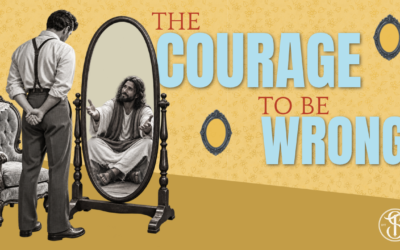
One of the most dangerous things about me is how easily I can convince myself that I’m right.
And I’m disturbingly good at it.
I found myself recently sitting across from a former mentee. We’d lost touch a few years after he graduated from college. I saw on Instagram that he was passing through town, so I reached out to grab coffee.
We started playing the usual catch-up game. How’s life? How’s work? What’s next?
Then, I learned something that I wasn’t particularly excited to hear.
He began sharing memories of comments I made toward the end of our time together that actually had deeply hurt him. And, what I’d assumed was the natural distance that comes with changing seasons of life was actually something else entirely.
He’d been creating space to heal from me.
(Ouch.)
Still…I could immediately feel a tension breaking out between my head and my heart.
My heart hurt because I’d hurt someone I genuinely cared about.
My head was already preparing my defense – “That’s not what I meant. He misunderstood me. Clearly he knows my heart.”
(Quick rabbit trail.)
Before anyone starts pointing fingers at him for not confronting me sooner, remember that he was young. I was also his professor. There was a power dynamic in our relationship, and expecting him to navigate that with the confidence of a 50-year-old is unfair.
(Back to our regularly scheduled programming.)
Here’s something I’m learning about myself. I rarely question my motives. I assume they’re good. And when my actions produce something painful, I’m remarkably skilled at reshaping reality to protect those motives.
Apparently, good intentions make excellent defense attorneys.
In 2 Samuel 12, the prophet Nathan confronts King David after his sin with Bathsheba and the murder of Uriah. Rather than confronting David directly, Nathan tells him a story about a wealthy man who steals a poor man’s only lamb.
David is furious. He demands justice.
(Feels familiar.)
Then Nathan delivers four devastating words.
“You are the man!” (2 Samuel 12:7)
David could recognize injustice perfectly well when someone else was responsible for it.
(Oofta…again…feels familiar.)
I wonder how often our ability to explain our behavior keeps us from actually examining it.
We become so committed to defending our intentions that we dismiss the impact of our actions.
And people get hurt.
I’ve been thinking about this in the context of leadership, particularly for those of us who lead in the marketplace. We can build organizations, make difficult decisions, and genuinely believe we’re serving people while remaining painfully unaware of the damage we occasionally leave behind.
But there’s hope in David’s story.
When confronted, David eventually says, “I have sinned against the LORD” (2 Samuel 12:13).
No elaborate defense.
Just ownership.
That coffee conversation gave me an uncomfortable gift. Someone trusted me enough to tell me the truth about myself. And while I wish I’d never hurt him, I’m grateful he didn’t leave me believing a more flattering version of our story.
Maybe that’s one of God’s greatest kindnesses. People who love us enough to interrupt the stories we tell ourselves.
May we have the humility to listen.
And the courage to change.

Bill Tibbetts
Bill Tibbetts is the Vice President of Education and Multiplication at The Stone Table, bringing over two decades of experience in higher education to his role. As the former Dean of the College of Business and Technology at North Central University, he developed a deep passion for mentoring, missions, and business consulting. Bill's extensive expertise uniquely positions him to lead initiatives that encourage marketplace believers and college students to actively engage with the Great Commission. He also serves on the board of the Community Reinvestment Foundation and is based in Minneapolis, MN, supporting The Stone Table's expansion into new regions.