

What Does Unreached Mean? Gospel Access Explained
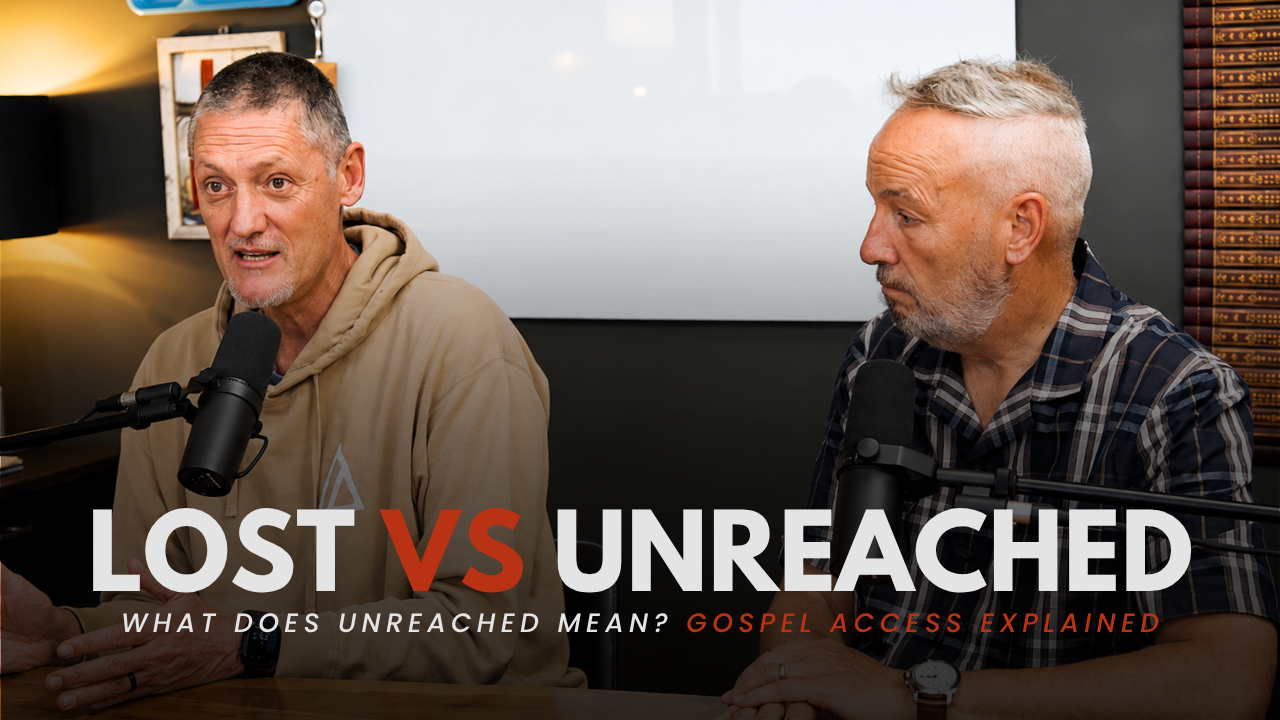
Lost and Unreached Are Not the Same Thing and the Difference Changes Everything
Rob Ketterling has built one of the most missions-focused churches in America. River Valley runs sixty missions trips a year and is working to send five hundred missionaries from a single congregation.
And by his own admission, he did not understand the central statistic of global missions until about eight years ago.
When someone finally explained it to him, his word for the reaction was blunt. “I was shocked to my core.”
If a pastor that committed to missions can miss it, most of us have too. So here is the number, and here is why it reorganizes how you think about the whole task.
The Word Doing All the Work Is “Access”
Start with the global picture. Around eight billion people are alive right now. Roughly seven billion are lost. Of those seven billion, about 3.9 billion are unreached.
Lost and unreached sound like synonyms. They are not.
Lost describes spiritual condition. Unreached describes access. As Dick Brogden puts it, 3.9 billion people do not know how to find out about Jesus even if they wanted to.
The contrast is easiest to see up close. Your lost neighbor drove past fifteen churches on the way to work this morning. He has heard the name of Jesus his entire life. He has access. He is choosing.
A member of an unreached people group has no such choice available. There is no church to drive past. There may be no believer within reach at all.
Both people need Jesus. Only one of them can currently find Him.
The Number Is Growing, Not Shrinking
Here is the part that unsettled Ketterling once he started doing the math. This is not a problem we are slowly solving. Global population growth is outpacing the spread of the gospel into these communities.
Brogden’s framing is pointed. If you are a competitive person, this should bother you, because we are actually losing ground.
An unreached people group gets defined two ways. Numerically, it is a group that is less than two percent evangelical. Qualitatively, it is a group so small, so marginalized, so persecuted, or so afraid that it cannot reach its own people. By the qualitative measure, the real figure is higher than forty-two percent.
The Category Beneath Unreached
Inside the unreached sits a smaller and darker category: the unengaged.
A people group has its own language, culture, religion, and territory. An unengaged group has all of that and no church, no missionary, no Bible school, and no known Christians of any kind. Roughly two thousand groups fit that description.
Brogden calls it the tragedy of our day. Two thousand years after the resurrection, there are still whole nations of the Bible with nothing. Erik Cooper gives it a name that is hard to argue with: the greatest injustice in the world today is that a person can be born, live, and die and never even hear the name of Jesus.
Where the Resources Actually Go
If the access gap were only a manpower problem, it would be daunting. It is also an allocation problem, and the allocation numbers are harder to sit with than the population ones.
Of all Christian giving, roughly one percent reaches the unreached. Of all Christian missionaries, roughly three percent serve among them.
Brogden is careful not to overstate the claim. No one is arguing that every missions dollar should be redirected. His point is proportion. If forty-two percent of the world is unreached, the strange thing is not that we send anything to the reached world. The strange thing is that we send ninety-nine percent of the money there.
Part of the explanation is uncomfortable. These are hard, slow, expensive places. We want a hundred dollars to produce a hundred conversions this week. Ten years and a million dollars for a single person does not make a compelling newsletter. So the resources drift toward the results we can photograph.
The False Choice at the Bottom of It
The most common objection Cooper hears is the local one. Why care about people across the world when there are lost people down the street?
His answer, and Ketterling’s, is that the question contains a hidden either-or that does not need to exist. Ketterling once had a youth pastor tell him, “I’m more of a local guy. I don’t have the heart for the world.” His response was two words. Wrong answer. The two are not exclusive.
The way River Valley fights the drift is by refusal to let it become invisible. They present missionaries constantly. They build a culture of going and giving and sacrifice. They start with the kids. Ketterling describes it as slow-baking a congregation in the Great Commission until the global heart is simply part of who they are.
And Brogden adds the strategic reason the either-or is not just unkind but backwards. Prioritize the local, and you do not automatically get the far. But prioritize the hardest places and peoples of the world, and the Lord blesses that, and you get the local as well.
What to Do With This
The point of the number is not despair. Ketterling’s own landing place, after the discouragement, was simple: do what I can, and pray for miracles.
You can start by knowing the difference between lost and unreached, and letting it shape where your attention and your giving go. You can refuse the either-or. You can care about the fifteen-churches neighbor and the no-church people group at the same time, because the gospel was always meant for both.
Start here: thestonetable.org/start
Full Transcript
Erik: Let’s talk about forty-two percent unreached around the world. What does that mean when we say unreached, when we talk about gospel access? Can you guys unpack that a little bit for people who might be watching this? I’m looking at you.
Rob: Well, here’s a confession. I was so into missions, and it wasn’t until probably eight years ago that I even realized that stat. And I love missions. We’re trying to send five hundred missionaries from our church alone. When that stat was shared with me, I was shocked to my core.
Then when I started doing the math, I was like, how do we make it from forty-two to forty-one? And I got discouraged. And then I was like, okay, I’m going to do what I can and pray for miracles. So I just want you to know, if somebody doesn’t know this, and I’d love for you to explain it, I didn’t know, and I was in love with missions.
Erik: Yeah, can you unpack that for us?
Dick: So the global population right now is eight billion. Of those eight billion, seven billion are what we call lost. Of those seven billion that are lost, 3.9 billion are what we call unreached. And the difference between unreached and lost, what Pastor said, is the access issue. 3.9 billion people around the world don’t know how to find out about Jesus even if they wanted to.
That number is only growing because of global populations. So if you’re a competitive person, this really should bother you, because we’re actually losing. We’re losing ground. We’re not keeping up with birth rates.
An unreached people group is defined two ways. One, numerically, less than two percent evangelical. The other is qualitatively, meaning there are so few, so marginalized, so persecuted, or so afraid, they can’t reach their own. So really it’s higher than forty-two percent. But 3.9 billion people around the world are in this category of not having adequate access to Jesus.
And there’s a subcategory within unreached which is particularly worrisome, and that’s what we call the unengaged. A people group has their own language, culture, religion, and space. But two thousand of them don’t even have a church, or a missionary, or a Bible school, or even Christians that we know of. And that’s probably the tragedy of our day. Two thousand years after the cross and the resurrection, there are still distinct ethnic peoples, the people groups of the Bible, the nations of the Bible, that have nothing. They have no access to Jesus. And that’s the responsibility we all bear.
Erik: I hear people say a lot, why should we care about people around the world when we’ve got lost people right here in our own communities? Rob, I’ve heard you talk about this. I think we’ve created an either-or equation, and it needs to be both-and. And what you just said, Dick, is so key. Yes, we have lost people in our own communities, but they’ve driven by fifteen churches on their way to work today. There are places in the world that have no one, where you can be born, live, and die without ever as much as meeting another believer, let alone hearing someone unfold the gospel to you in a way that you can understand.
So this is what I want people to understand. Yes, we care about our neighborhood. Yes, we care about our workplaces. Of course. We talk about that all the time here at The Stone Table. But all of us need to own what I call the greatest injustice in the world today. The greatest injustice in the world today is that people could be born, live, and die and never even hear the name of Jesus.
Dick, I’ve heard you say too, correct me if I’m wrong, of all the 3.9 billion people, forty-plus percent of the global population is unreached with the gospel. What percentage of Christian giving and resources goes to those forty-plus percent?
Dick: Only one percent of all Christian giving, and only three percent of all Christian missionaries. That is a sobering fact. Most of our money and most of our personnel are going to where there are already Christians, already churches. So the pronouns, even in your illustration. We, our community. We are there in our communities, praise the Lord. But there are so many communities without the we, without the us, without any believers in Jesus.
No one is saying that all missions money should go to the unreached. But if forty-two percent of the world is unreached, shouldn’t forty-two percent of our personnel and our finances go there? Not one percent. Something’s wrong there.
Erik: And the extra problem is those are really difficult places to go.
Dick: That touches on the issue, because we want bang for our buck. We want to give one hundred dollars and see one hundred people get saved, and we want to see that in one week. But what if it takes ten years for one person to get saved, and that costs a million? We’re not so excited about those numbers.
Erik: Right. Rob, how do you preach this to your congregation? How do you instill this in their heart?
Rob: Because it’s not an either-or. We’ve said it’s both. I once had a youth pastor say to me, I’m more of a local guy. I don’t have the heart for the world. I said, wrong answer. They are not exclusive.
So what we’ve had to do is keep it in front of them, because they’re not aware. Keep them focused on mission. We’ve had to present missionaries over and over again. We’ve had to have this culture that calls for sacrifice and giving and generosity and going. We’ll do sixty trips this year, which sounds crazy, but we do.
Erik: Like you said, you were raised in a church that slow-baked you in the Great Commission.
Rob: That’s us. We’re just slow-baking them. Even our missionaries that will do a five-spot, they go in and talk to the kids. We’re starting young with that. So it’s just constantly keeping it in front of them.
Erik: So of course you’re encouraging people to care about their neighbors in the Twin Cities area.
Rob: Yes. We have to reach the people that are all around us each and every day.
Erik: And I don’t know about the conviction that we all ought to be talking about Jesus a whole lot more than we are. It’s like, I only talk about Jesus when I go on a cross-cultural missions trip. We need to encourage people, reach your neighbors, build relationships at your workplace, all of those things. But gospel access.
Rob: Gospel access. We have to.
Dick: And the reality is, if you prioritize the local, you don’t automatically get the far. But if you prioritize the most difficult places and peoples of the world, the Lord blesses that and you get the local as well.

Darren Cooper
After spending years on the creative staffs at multiple churches and even starting a business of his own, Darren joined The Stone Table team to help in all things creative. He is also a producer and composer and loves to speak through the medium of music. Find out more at darrencoopermusic.com.